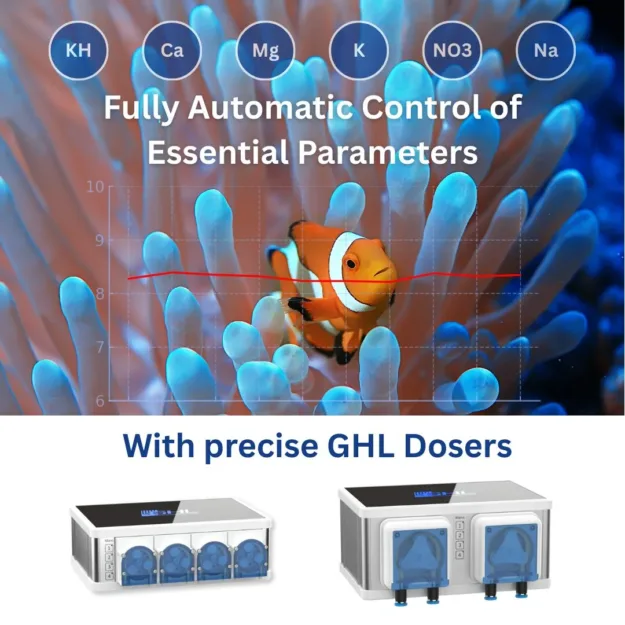
GHL Dosers Enable Fully Automatic, Measurement-Based Dosage Adjustments for Stable Aquarium Conditions

GHL Dosers offer fully automated, measurement-based dosage adjustments to maintain stable aquarium conditions. Utilizing data from GHL’s Director devices, these dosers can automatically modify dosages, ensuring optimal stability. The system supports various control modes and precise settings, with connectivity options including WiFi for standalone units, enhancing user convenience and system integration.

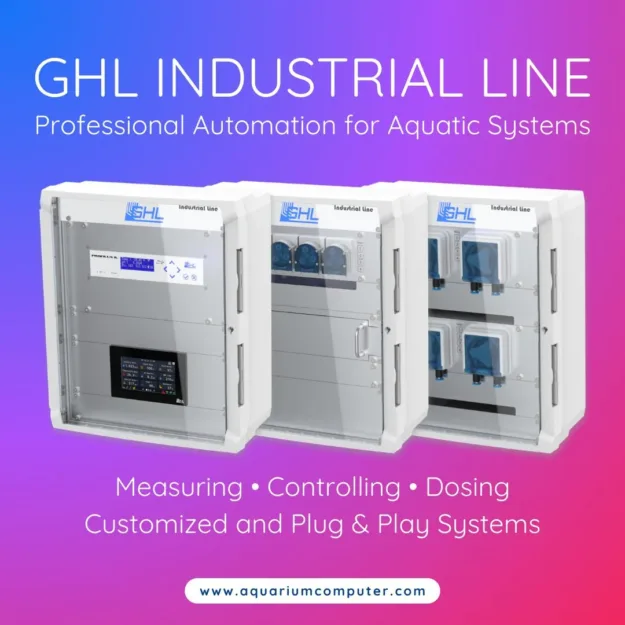
ProfiLux in Large-Scale and Research Applications

How ProfiLux is Used in Large-Scale and Research Applications Advanced Monitoring and Control for Public Aquariums, Aquaculture, and Scientific Research Managing water quality is essential in public aquariums, aquaculture facilities, and scientific research, where stability, precision, and automation are critical. In these applications, even slight fluctuations in water chemistry, oxygen levels, or temperature can have significant consequences. GHL’s ProfiLux Industrial Line (IL) and standard ProfiLux 4, combined with KH Director® and ION Director®, provide comprehensive automation and monitoring of all crucial parameters: pH and KH (carbonate hardness) – Ensures buffer stability and pH consistency. Temperature – Prevents thermal stress and seasonal instability. Salinity and Sodium (Na) – Maintains proper osmotic balance for marine species. ORP (Oxidation-Reduction Potential) – Tracks water quality and organic waste breakdown. Dissolved Oxygen (Oâ‚‚) – Is essential for aquarium inhabitants. Calcium (Ca) and Magnesium (Mg) – Essential for coral growth, shell formation, and metabolic stability. Potassium…

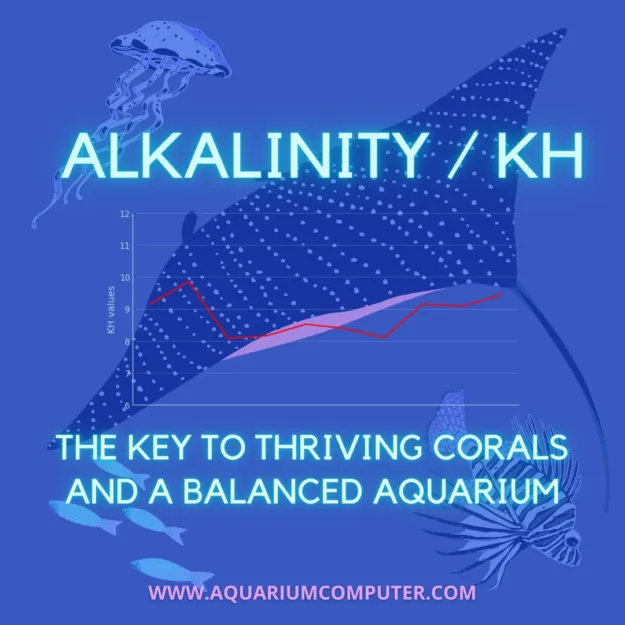
Mastering Alkalinity: Key to Thriving Corals and a Balanced Aquarium

Alkalinity: Essential for Coral Health and Aquarium Stability In aquarium keeping, water chemistry plays a vital role in the health and stability of your aquatic environment. One key component is alkalinity, or carbonate hardness (KH), which refers to the water’s buffering capacity—its ability to resist changes in pH. This stability is especially important in both freshwater and marine tanks, as sudden pH shifts can harm fish, plants, and corals, which thrive in consistent conditions. Ideal KH levels vary based on aquarium type: for reef aquariums, KH should range between 7 and 11 dKH, with 8-9 dKH often recommended, while freshwater tanks do best around 4-8 dKH, with species-specific needs such as lower KH for Amazonian fish (1-4 dKH) and higher KH for livebearers (4-8 dKH). While alkalinity and KH are often used interchangeably, they aren’t exactly the same. For a deeper understanding, check the explanation at the end of this…