Moonlight in the Aquarium – Simulating the Lunar Cycle

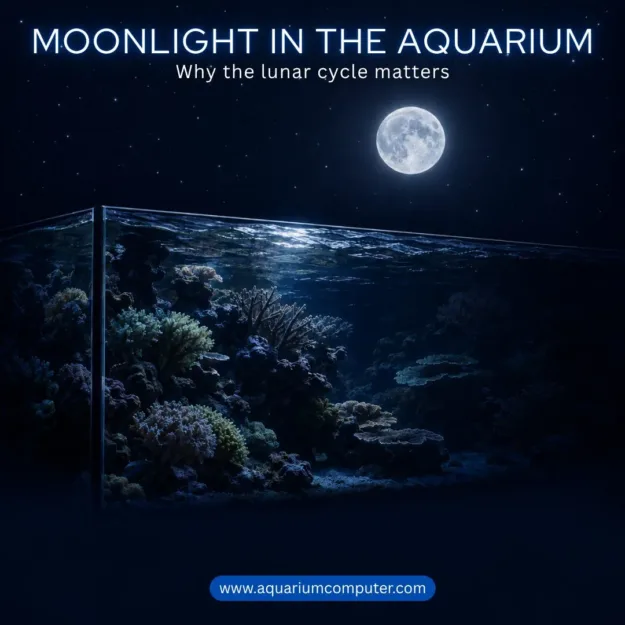
Moonlight in the aquarium: why the lunar cycle matters — and how every GHL luminaire reproduces it Reef life follows the moon. Most aquariums ignore it: the night light, if there is one, is the same every night. Here is why the lunar cycle is worth reproducing, and how it works with every GHL luminaire. Why the moon matters underwater Once a year, in their spawning season, many stony corals release their gametes in the same few nights — often a few nights after a full moon. Numerous reef fish, crustaceans and polychaete worms show the same lunar periodicity in their reproduction. Recent research indicates that an important cue may not simply be the full moon itself, but the sequence of light and darkness around it, including the dark hours between sunset and moonrise in the nights that follow. Moonlight also shapes nocturnal life in a less obvious way: visually…

Coral Fluorescence: Biochemistry and Ideal Aquarium Lighting

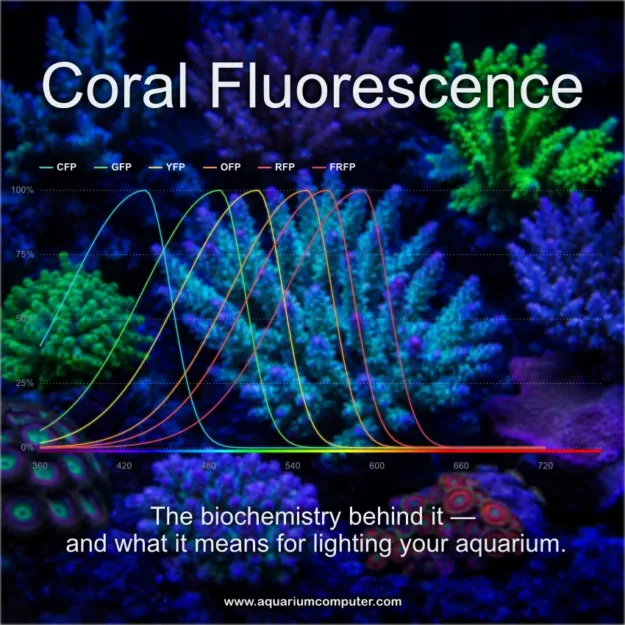
Coral fluorescence results from proteins in the coral animal that absorb shorter-wavelength light and emit longer-wavelength colors, distinct from the coral’s symbiotic algae. Different fluorescent proteins require specific excitation wavelengths—blue light excites green and cyan, while orange and red proteins need green-to-yellow light. GHL’s Mitras LX8 fixture offers twelve adjustable channels spanning near-UV to Hyperred, enabling tailored lighting to both highlight fluorescence and support coral growth.

The Science Behind Coral Fluorescence: Understanding the “Wide-Band-Blue”

Corals glow because fluorescent proteins re-emit absorbed light at longer wavelengths, while chromoproteins add color by reflection. GHL’s “Wide-Band-Blue” spectrum (390–510 nm) excites the cyan and green proteins behind most of the fluorescence; additional channels reach toward violet and red for the rest of the palette — adjustable across the Mitras LX luminaires.

Understanding the Color Temperature of White Light: From Warm to Cold

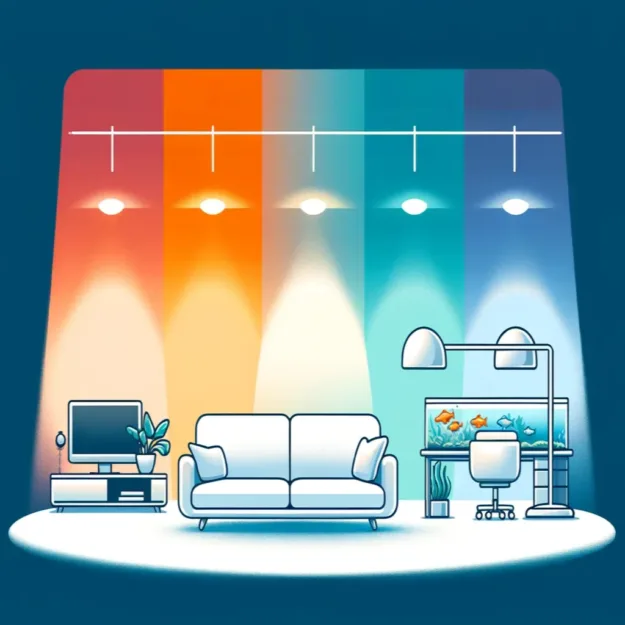
When it comes to lighting, the color temperature of white light plays a pivotal role in setting the mood and functionality of a space or other areas of illumination, for instance aquarium or greenhouse lighting. The terminology used to describe these types of white — warm white, soft white, neutral white, natural white, cool white, and cold white — can often be confusing. This blog post aims to clarify these terms. The Basics of Color Temperature The Color temperature (or more precisely Correlated Color Temperature – CCT) is a way to describe the color appearance of a light source by comparing its color to the color of light emitted by a theoretical black body when heated to a particular temperature, measured in Kelvin. The idea is that if a light source has a CCT of 3,000K, its color appearance is similar to the light emitted by a black body heated…