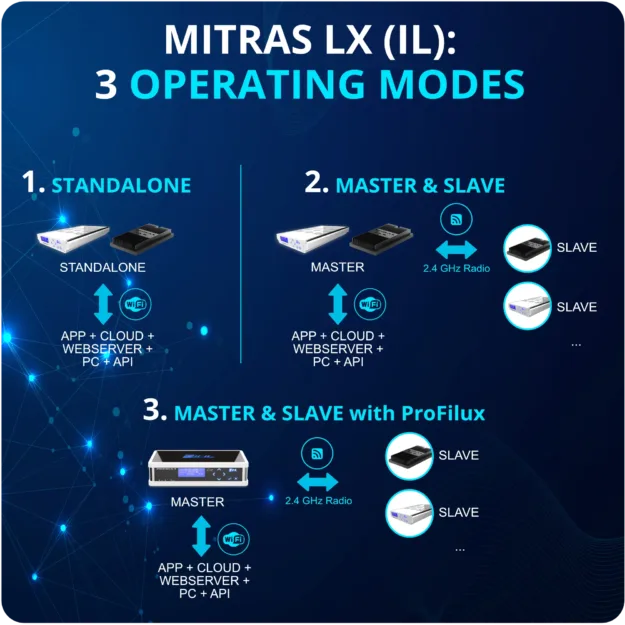
Mitras LX: Operating Modes and Integration

Mitras LX – exceptional control, flexibility, and performance The Mitras LX7 and Mitras LX7 IL series by GHL represent cutting-edge LED lighting solutions designed for aquarists who demand exceptional control, flexibility, and performance. These fixtures offer three distinct operating modes to adapt to a wide range of setups and preferences: Standalone, Master-Slave, and ProfiLux-Slave modes. Additionally, the system integrates seamlessly with advanced technologies, making it ideal for both hobbyists and professionals. Operation Modes Standalone Mode In Standalone mode, each Mitras LX7 operates independently, utilizing its integrated control system. Users can program and manage lighting schedules, intensity, and spectral outputs directly on the fixture without the need for external controllers. This mode is ideal for aquarists who prefer a straightforward setup or operate a single light fixture. Master-Slave Mode For setups with multiple Mitras LX7 units, the Master-Slave configuration allows synchronized operation. In this mode, one fixture acts as the Master,…
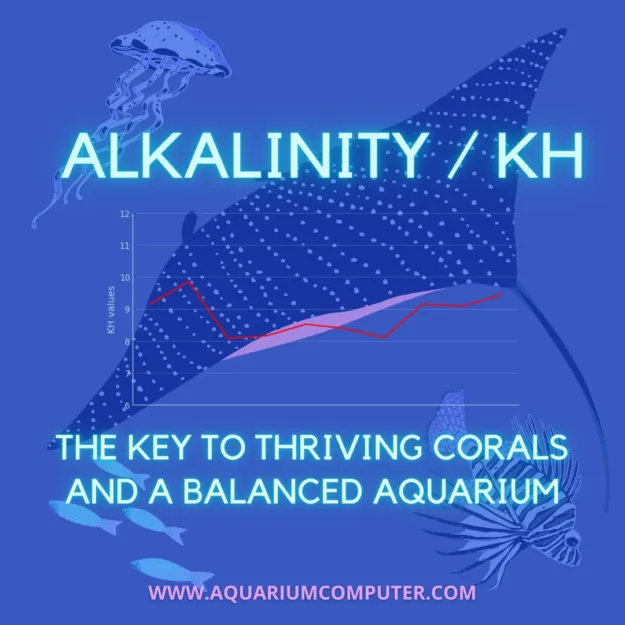

Mastering Alkalinity: Key to Thriving Corals and a Balanced Aquarium

Alkalinity: Essential for Coral Health and Aquarium Stability In aquarium keeping, water chemistry plays a vital role in the health and stability of your aquatic environment. One key component is alkalinity, or carbonate hardness (KH), which refers to the water’s buffering capacity—its ability to resist changes in pH. This stability is especially important in both freshwater and marine tanks, as sudden pH shifts can harm fish, plants, and corals, which thrive in consistent conditions. Ideal KH levels vary based on aquarium type: for reef aquariums, KH should range between 7 and 11 dKH, with 8-9 dKH often recommended, while freshwater tanks do best around 4-8 dKH, with species-specific needs such as lower KH for Amazonian fish (1-4 dKH) and higher KH for livebearers (4-8 dKH). [mkb-info]While alkalinity and KH are often used interchangeably, they aren’t exactly the same. For a deeper understanding, check the explanation at the end of this…

The Science Behind Coral Fluorescence: Understanding the “Wide-Band-Blue”

Corals glow because fluorescent proteins re-emit absorbed light at longer wavelengths, while chromoproteins add color by reflection. GHL’s “Wide-Band-Blue” spectrum (390–510 nm) excites the cyan and green proteins behind most of the fluorescence; additional channels reach toward violet and red for the rest of the palette — adjustable across the Mitras LX luminaires.

The Benefits of Automatic Fish Feeders for Aquariums

Simplifying fish care while promoting a healthy aquarium environment Keeping an aquarium comes with the responsibility of maintaining a consistent feeding schedule, which can be difficult for busy aquarists or frequent travelers. Automatic fish feeders provide a convenient solution that ensures fish are fed regularly, promoting their health and stabilizing the aquarium environment. But what are the benefits of an automatic fish feeder? Consistent Feeding for Healthy Fish Automatic fish feeders offer precise, regular feeding schedules that reduce fish stress and prevent health issues caused by overfeeding or underfeeding. Overfeeding leads to waste accumulation, harming water quality and promoting algae growth, while underfeeding can lead to malnutrition. By delivering the right portions at consistent times, automatic feeders help maintain a balanced, healthy aquarium. Maintaining Water Quality Overfeeding can lead to decaying food in the water, which destabilizes water parameters and promotes algae. Automatic feeders prevent this by dispensing controlled portions,…

A Deep Dive into Automatic Water Changes in Aquariums

Aquarium enthusiasts know the importance of maintaining pristine water quality to ensure the health and vitality of their aquatic life. One of the most effective ways to achieve this is through regular water changes. While manual water changes are a traditional approach, they can be time-consuming, labor-intensive, and prone to inconsistency. This is where automatic water changes come into play, offering a host of benefits and convenience to hobbyists. In this blog post, we’ll explore the advantages of automatic water changes, explain why they are useful, and provide guidance on using the GHL Doser Maxi as a standalone device or in conjunction with a GHL ProfiLux aquarium controller. Why Automatic Water Changes Are Useful Water changes are essential for removing excess nutrients, toxins, and organic waste that accumulate in the aquarium over time. Without regular water changes, nitrate levels can rise, leading to algae blooms and other harmful conditions that…