

Few sights in reef keeping are as captivating as a coral glowing under aquarium light. Brilliant green Zoanthus, deep-red mushroom corals, and multicolored Trachyphyllia can look almost unreal under the right spectrum. The effect isn’t magic — it’s a mix of physics, chemistry, and biology. Understanding it explains why some corals light up while others stay subdued, and why your choice of lighting spectrum changes so much of what you actually see.
This article walks through that biochemistry in plain language. You don’t need a background in biology to follow along: we’ll look at what fluorescence actually is, why corals show it, and what it all means for lighting your aquarium. The science behind it fills entire textbooks — here we stick to the parts that help you choose your aquarium lighting wisely and set it up well.
What fluorescence really is
Fluorescence is a quick exchange of energy. A pigment absorbs a photon of light, which lifts one of its electrons into a brief, high-energy state. Within billionths of a second the electron drops back down and the pigment releases a new photon. Some energy is always lost as heat along the way, so the emitted photon carries less energy than the one absorbed — and lower energy means a longer wavelength. The gap between the two peaks is called the Stokes shift. This is the one rule that governs all of it: a fluorescent pigment is always excited by light of a shorter wavelength than the light it emits.
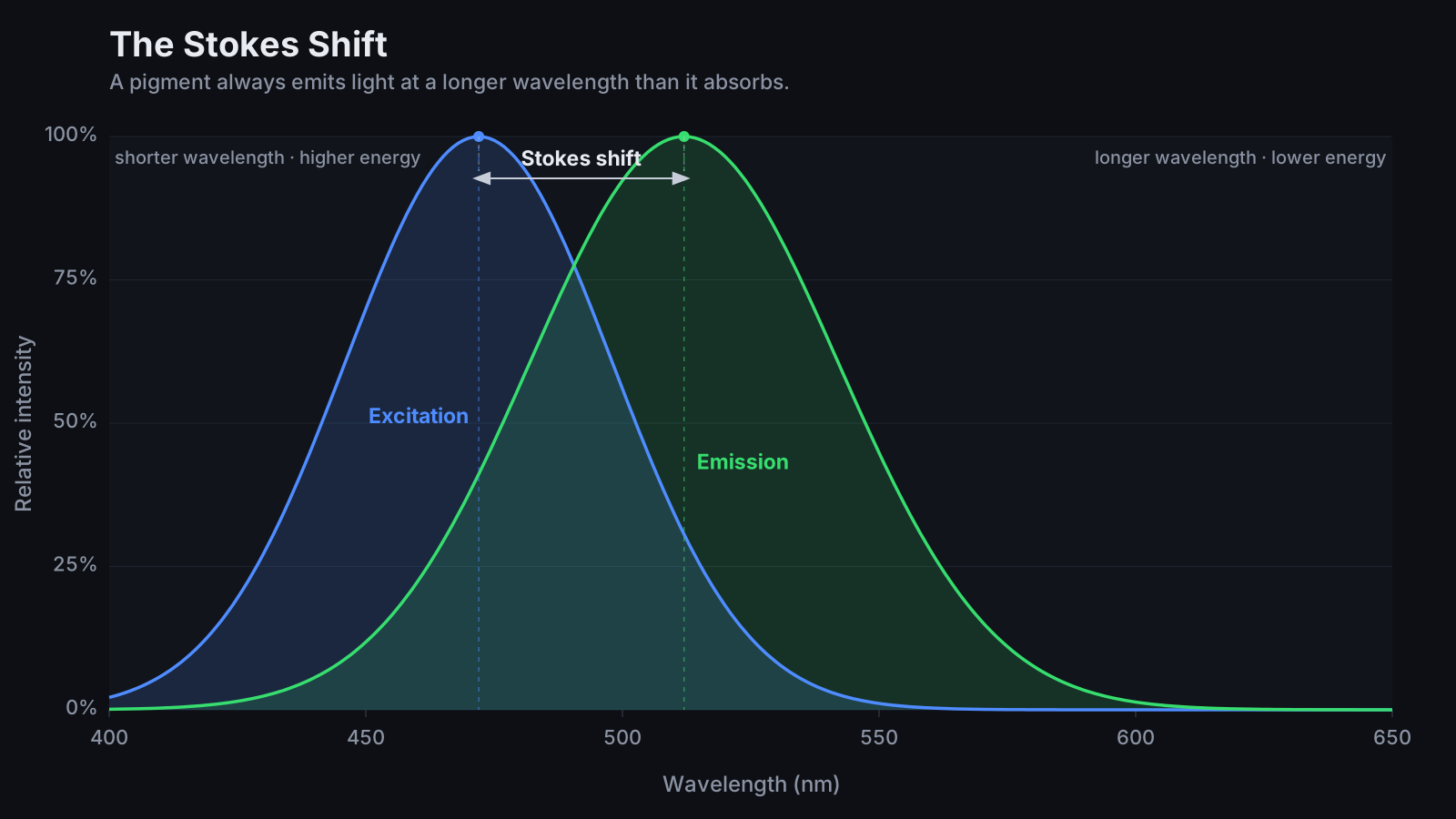
Excitation and emission of a fluorescent pigment — emission always sits at a longer wavelength.
The chemistry behind the glow
Each fluorescent protein carries its light-emitting core, the chromophore, deep inside a barrel-shaped structure. Remarkably, this core builds itself: once the protein folds, a short stretch of its own amino acids reacts to form the chromophore, needing nothing but oxygen to mature. Red-emitting proteins run through one additional oxidation step that extends this internal chemistry a little further — and a slightly larger light-emitting system shifts the glow toward longer, redder wavelengths. That is why a green protein and a red one, assembled from very similar building blocks, can emit such different colors.
It comes from the coral, not the algae
A common assumption is that the colors come from the coral’s symbiotic algae, the zooxanthellae. They don’t. The algae often contribute strongly to a coral’s everyday appearance — their photosynthetic pigments give many corals their brown, golden, or olive tones — but they are not the source of the bright green, cyan, orange, or red fluorescence. That glow is produced by the coral animal itself, through proteins of the GFP family, named after the Green Fluorescent Protein first found in a jellyfish.
Fluorescent proteins vs. chromoproteins
Not every coral color is fluorescence. Corals also carry chromoproteins — pigments that show a strong color but never glow. They absorb some wavelengths and reflect others, so they look vivid under white light yet re-emit no fluorescent light of their own. The deep blue and purple tips of many Acropora are the classic example: that color is a non-fluorescent chromoprotein.
The same colony often also carries a fluorescent protein — in Acropora, usually a green or cyan one. The two behave differently as the light changes: the chromoprotein shows its color by reflection under any light, while the fluorescent protein only lights up when light of the right wavelength reaches it — always shorter in wavelength than the glow it produces. Shift the lighting toward those exciting wavelengths and the fluorescence comes forward alongside the reflected color, which is the simplest way to tell a pigment that glows from one that merely reflects.

Same colony under white light — the purple chromoprotein tips show by reflection alone; nothing fluoresces.
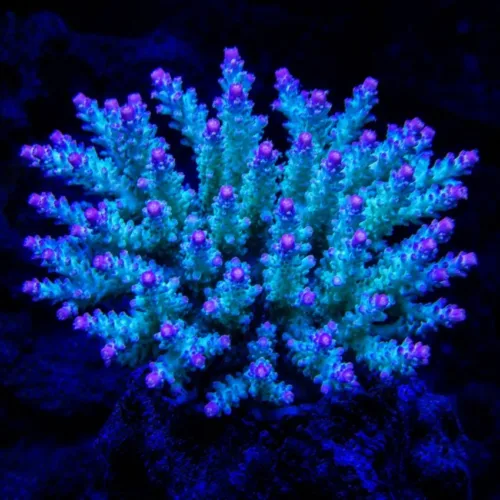
Same colony under blue light — the fluorescence lights up the branches in cyan-green, while the purple chromoprotein tips stay visible.
One family, many members
It helps to think in color categories rather than single molecules: cyan, green, yellow, orange, and red fluorescent proteins. Each category is really a large family of natural variants that differ from coral to coral, so the exact peaks shift around. What matters in practice is the typical position of each class, not one “correct” number — the precise figures for any single protein exist, but they aren’t what you need at the tank.
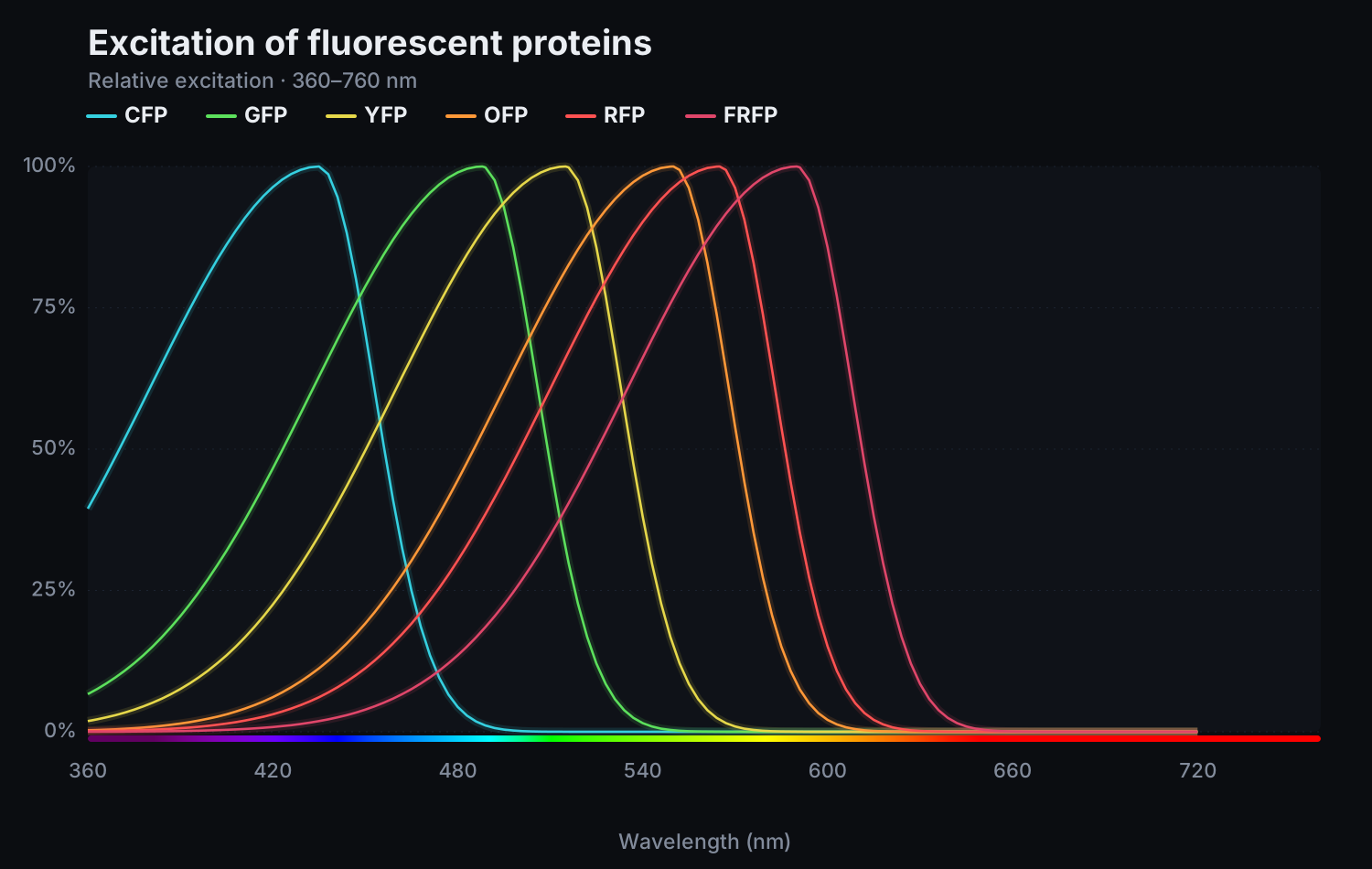
Excitation bands of the fluorescent-protein classes — each glows when lit from its own part of the spectrum.
A simplified, qualitative view: one representative curve per protein class, to show where each is excited. Individual proteins within a class vary, and their peaks shift along the spectrum.
Why different colors need different light
Because excitation is always shorter in wavelength than emission, each class responds to a different part of the spectrum. In rough terms:
- Cyan and green proteins are excited by blue light (around 440–490 nm) and emit cyan to green (around 480–520 nm).
- Orange and red proteins are excited by green-to-yellow light (around 520–570 nm) and emit orange-red (around 580–620 nm).
- At the very short end, some corals also carry blue-emitting proteins that need violet or near-UV light (around 360–430 nm) to glow.
This is where the popular shortcut — “blue light makes corals glow” — falls short. Blue light is excellent at driving the cyan and green proteins, which is why blue-heavy tanks look so green. But it does little for the proteins at either end: the orange and red emitters whose excitation sits toward green and yellow, and the blue emitters at the short end that need violet or near-UV light. Light the tank with blue alone, and both ends of the palette stay dark.
Why do corals do it at all?
Honestly, this is still debated. One of the best-supported ideas is photoprotection — that these proteins help the coral handle excess light and ease the strain on its symbiotic algae. Exactly how they do this is still being studied, and the energetic details are contested. What the evidence does not support is the tidy claim that fluorescence directly feeds photosynthesis or drives growth; that’s a separate process, and it’s worth keeping the two apart.
A few familiar examples
Acropora
Famous for deep blue and purple tips, which are typically produced by chromoproteins: non-fluorescent pigments that create color by reflection rather than by glowing. Many colonies also carry green or cyan fluorescent proteins, which come forward under blue actinic light alongside the reflected color.
Zoanthus
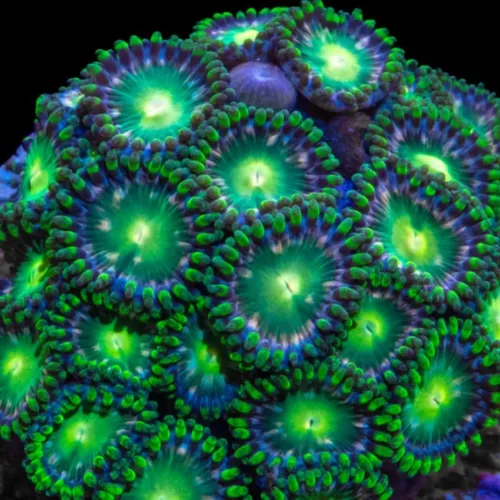
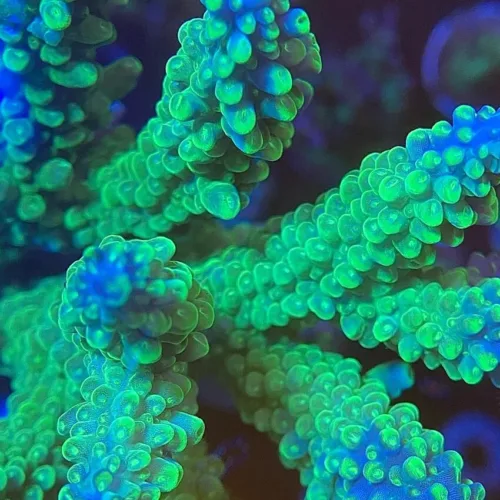
Found in almost every color, often multicolored on a single disc. The green morphs are a classic example of strong fluorescence excited by blue light and a reliable source of color “pop” under actinic lighting.
Discosoma mushrooms

Found in many colors, the genus earned its place in science as the natural source of DsRed, the first red fluorescent protein, excited by green-to-yellow light and later widely used in biological imaging.
Trachyphyllia

Often shows green and red fluorescence at once, the green responding to blue light and the red needing green-to-yellow light to reach full intensity, a clear example of why different fluorescent proteins require different excitation wavelengths.
But what about water depth?
Sunlight doesn’t stay the same underwater. The deeper you go, the more the spectrum narrows toward blue: long red wavelengths drop away within the first several meters, and even violet gradually fades, until — well down a reef slope — mostly blue is left. So if corals at depth mainly see blue, why bother with violet, near-UV, or red at all?
Because a reef tank isn’t a single depth. Most aquarium corals come from the upper reef, but across a wide span of zones — from bright, shallow tops where the full spectrum is present, down to lower, bluer slopes — and a typical tank mixes them. No single depth’s light fits them all. The blue-rich core of a good spectrum is the common ground: it does the most for growth, health, and coloration, matching what corals receive across most of that range. A measured amount of violet and near-UV serves the shallow-adapted corals — which carry their own UV-absorbing compounds — and lights up the shortest-wavelength fluorescence. And a small, balanced amount of red rounds out the color the eye sees while adding a few usable photons; it stays modest on purpose, because corals gain nothing from an excess of it. The aim isn’t to copy one depth, but to give a mixed reef community a complete, well-balanced spectrum.
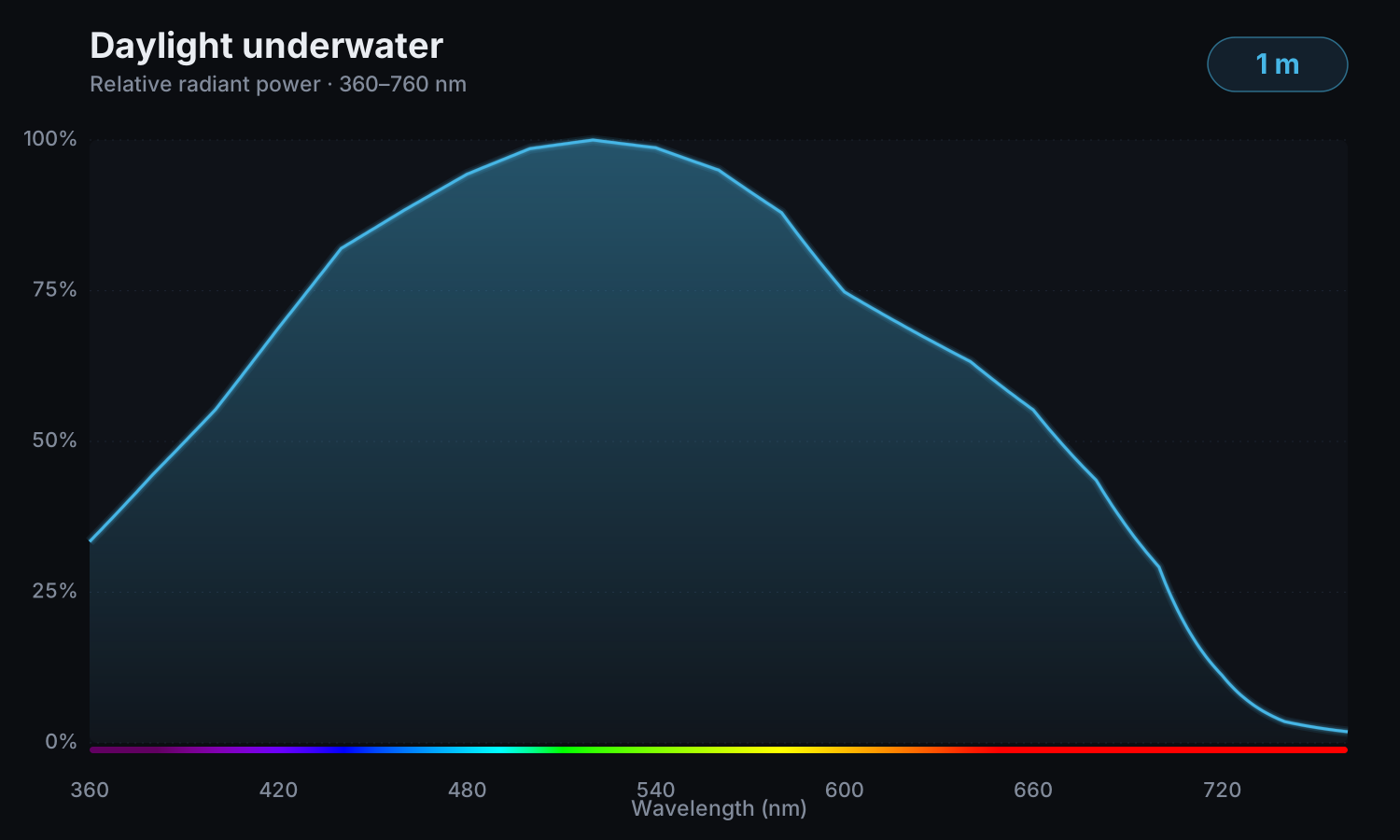
Daylight spectrum at 1 m depth — still broad, full color range present.
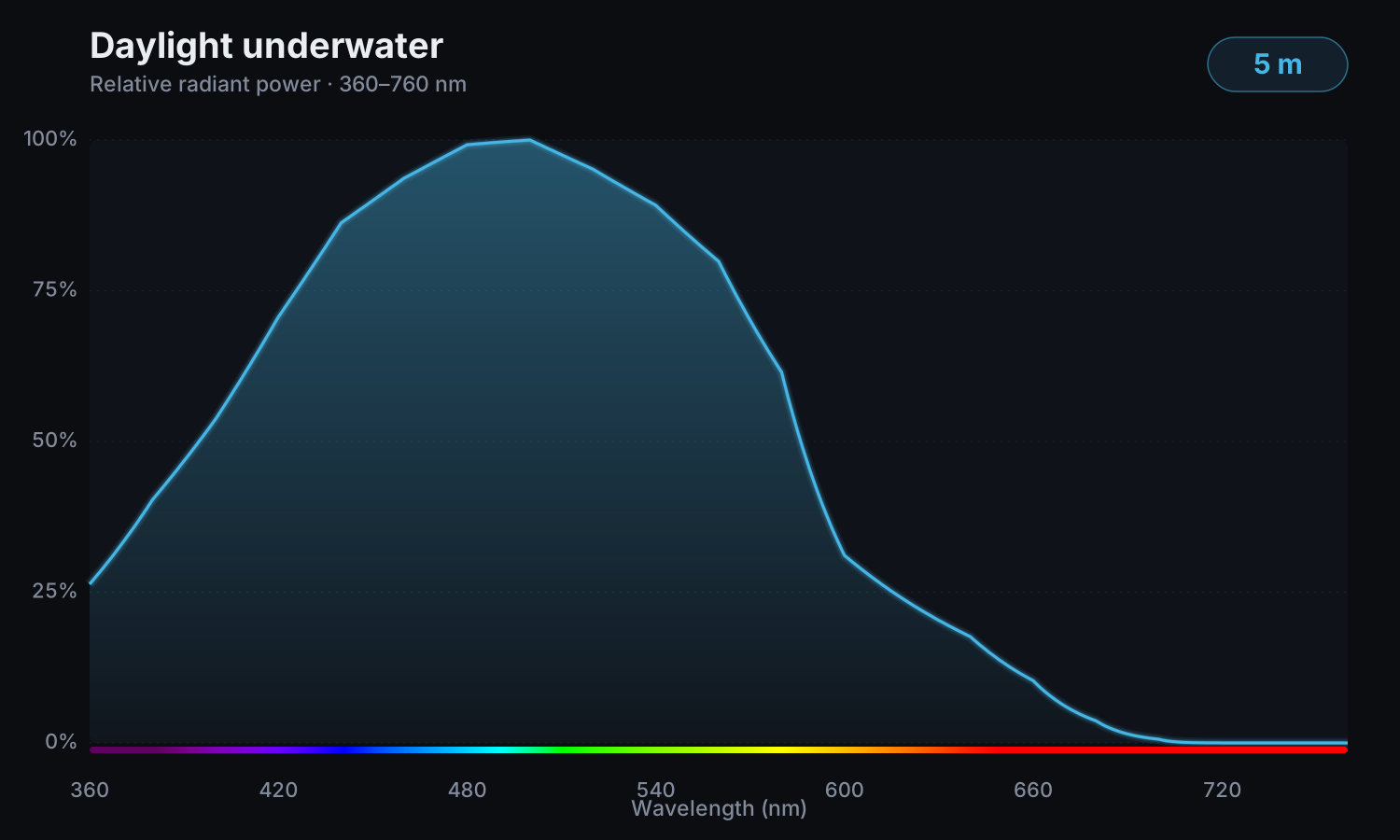
At 5 m the spectrum narrows toward blue — red has largely dropped away.
What this means for your lighting
Two things matter in a reef tank: exciting the fluorescent proteins so their colors show, and driving the photosynthesis that keeps corals healthy and growing. A blue-rich spectrum is the backbone of both — it powers coral growth and pigmentation and lights up the cyan and green fluorescence. But a backbone alone leaves color on the table.
Photosynthesis makes the same case. The chlorophylls that drive it absorb strongly in the blue — ground a blue-rich spectrum already covers — but they also take in light across a second band at the long end, spanning the orange-red into the red, where a blue backbone barely reaches. The answer isn’t a flood of red: as on the reef, a little does the work and an excess buys nothing. It’s the same balanced reach a natural spectrum implies — past blue at both ends, toward violet and near-UV on one side and a small, deliberate amount of red on the other. The pigments’ own absorption shows where that red belongs.
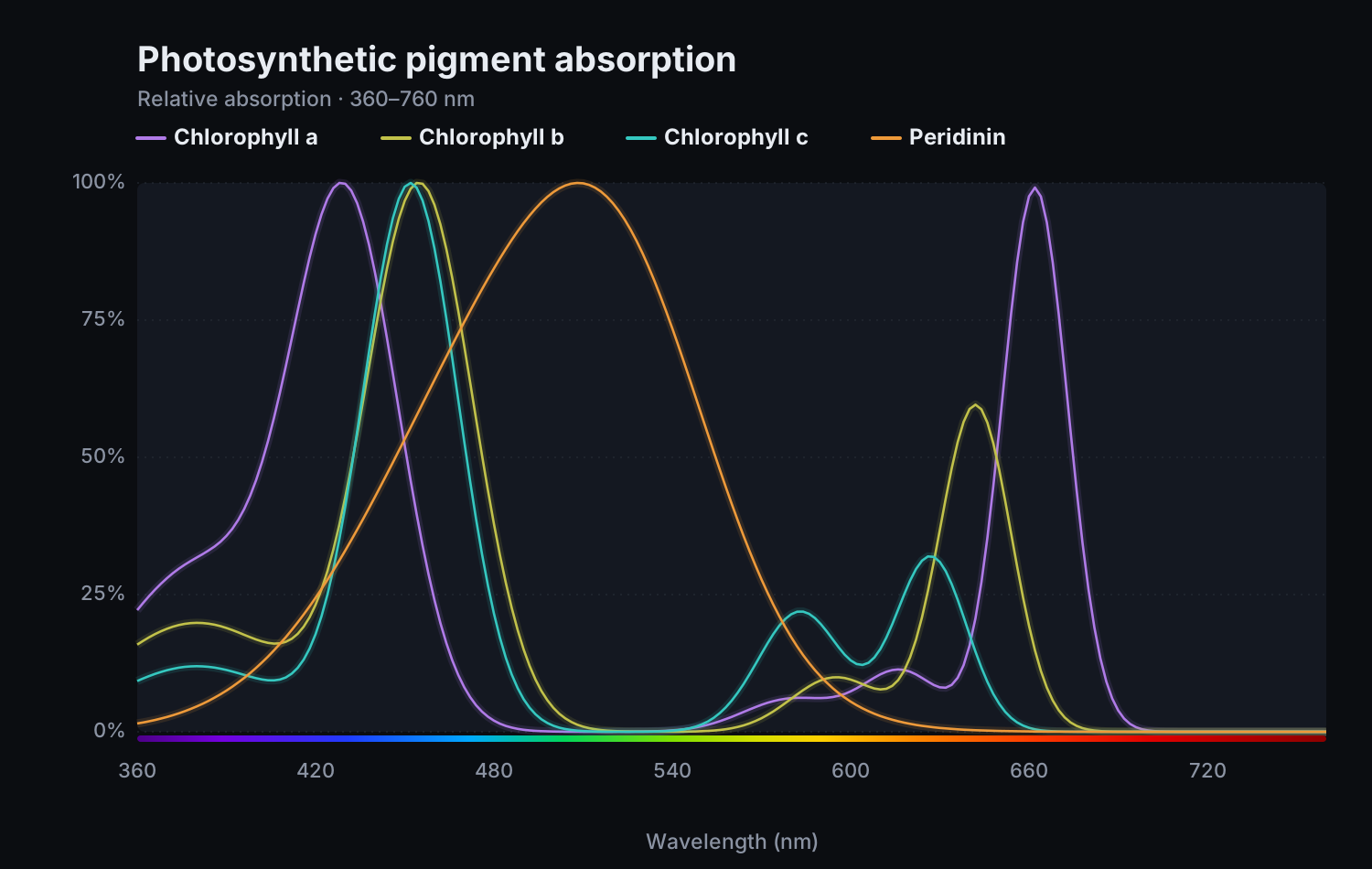
Absorption of the main photosynthetic pigments. The coral’s zooxanthellae use chlorophyll a and c together with peridinin — a carotenoid (xanthophyll) that also gives them their golden-brown color. Chlorophyll b is not found in zooxanthellae; it belongs to green algae and aquatic plants, such as refugium macroalgae. The chlorophylls’ red band is what a deliberate Hyperred peak helps feed, while peridinin harvests in the blue-green.
That is where the breadth of Mitras lighting comes in. Across the Mitras LX luminaires (LX7, LX7 IL and LX8) and the Mitras Lightbar series (LB2 and LB3), the spectrum reaches beyond blue in both directions. At the short end it extends into violet and a measured amount of near-UV, reaching the excitation bands of the shortest-wavelength fluorophores and deepening the blue-violet rendering. At the long end, a small, deliberate Hyperred peak rounds out color rendering and adds usable photons in the chlorophyll absorption range. Underneath sits a foundation of several blended white LEDs that keeps overall color rendering natural.
The result is a spectrum that excites the full palette of fluorescent proteins — from the violet end, through the blue-excited greens, to the green-and-yellow-excited reds — on a blue-rich base that keeps corals growing.
And the spectrum isn’t fixed. Each color group is an independently adjustable channel — up to twelve on the LX8 — so you can shape the light to your tank and your eye: more violet to push fluorescence, a little more red for rendering, a bright blue midday easing into a soft dusk. The science sets the target; the channels let you hit it.
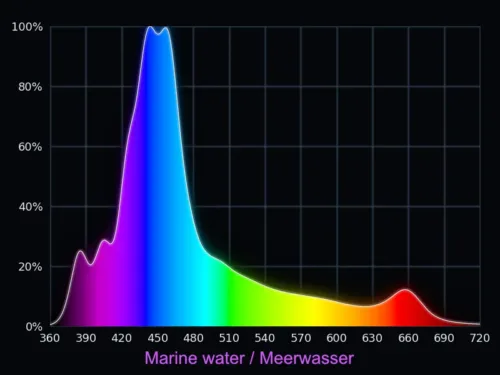
Spectrum example of the Mitras LX8 fixture
Everything above describes what a reef spectrum needs to do. The curve below shows it realized — a real Mitras LX8 output for a marine tank: blue-rich at its core, extending into violet and near-UV at the short end and a measured Hyperred at the long end. The same shape the science points to.
The GHL Core Illumination Products
Engineered light for every aquarium.

Mitras LX8
Our flagship reef luminaire — the full spectrum of this article engineered into a single fixture. Twelve independently adjustable channels reach from near-UV through a measured Hyperred, so you can shape the light to your tank and your eye while your corals grow and glow.
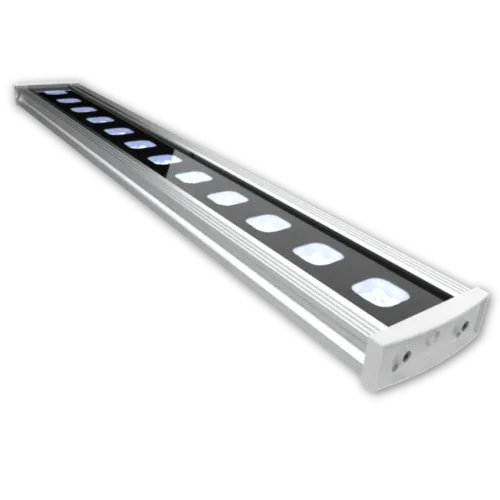
Mitras Lightbar 3
The modular bar that adapts to any aquarium — from a single nano to a full reef wall, in lengths from 40 to 200 cm. Seven adjustable channels and five ready-tuned spectra let you light fish, plants and corals in their truest colors.
A fully adjustable spectrum — doesn’t that sound complicated?
Back in the days of metal halide (MH) lamps, the question of how to set the ideal spectrum didn’t even come up — there was nothing to adjust. A lamp had two states: on or off. Fluorescent tubes didn’t offer much more. You either trusted a particular tube or mixed several, and in the deluxe version you might be able to dim them, or combine MH and tubes. What all these solutions had in common was that you had little or no control: you had to get the right mix in the first place, by choosing the “right” tubes and MH bulbs.
Modern LED solutions go far beyond that. With up to twelve separate channels — as on the Mitras LX8 — the spectrum can be set exactly to your needs, not to mention lifelike simulations such as passing clouds, sunset, thunderstorms, moonlight and much more. With classic lighting, that was simply impossible.
All these options can look daunting at first — especially if you’ve only ever worked with older lighting. But here’s the point: in most cases you don’t have to set anything at all. GHL fixtures come with proven default settings suited to the majority of tanks. You can fine-tune the spectrum if you want to — but you don’t have to. That’s the difference: full control when you want it, a ready-made starting point when you don’t.
What matters is that the software stays easy to understand and easy to use. GHL gives you the tools for exactly that: GHL Connect — the app and cloud solution for mobile devices — and the GHL Control Center — the PC software for professionals.
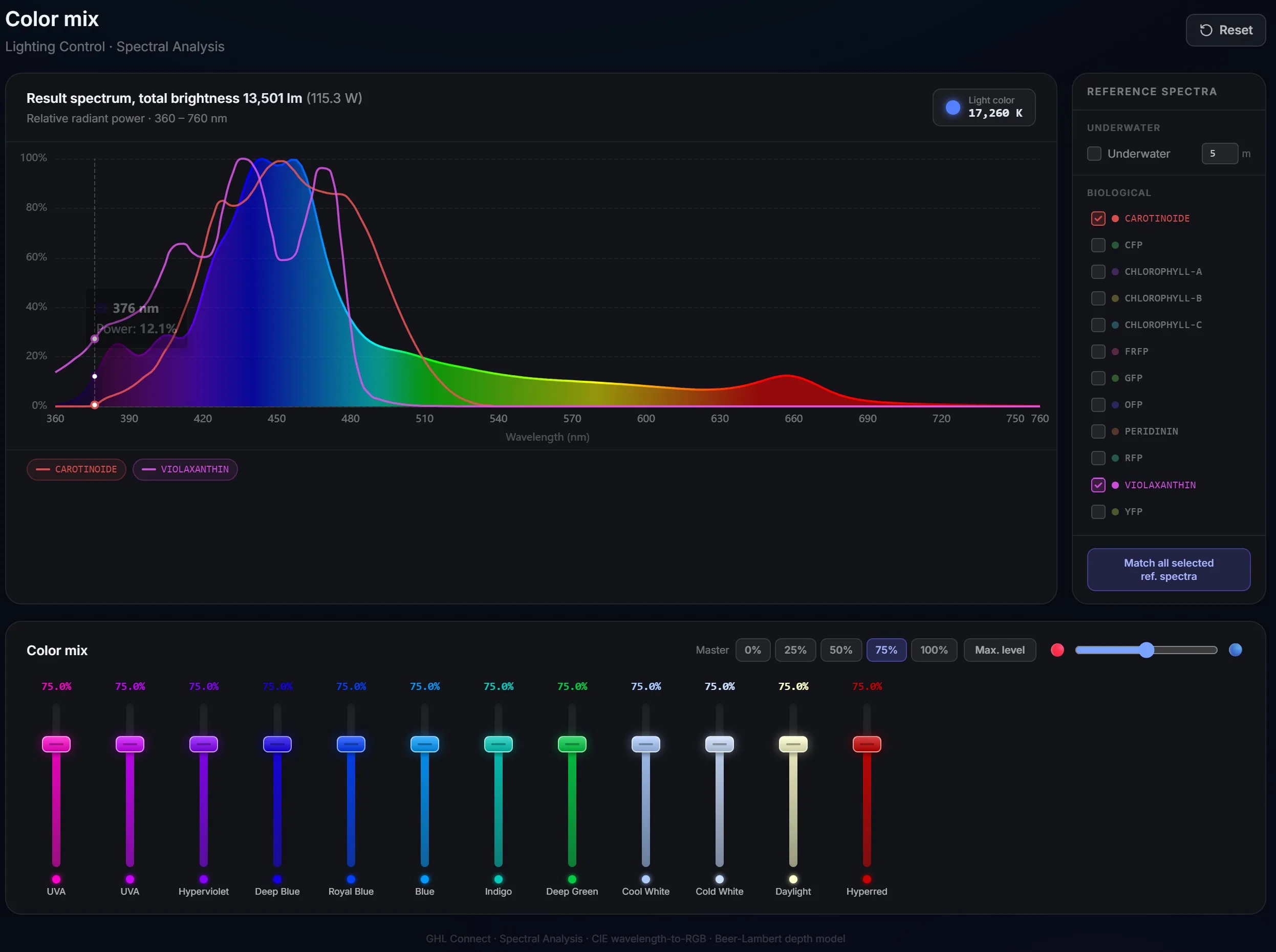
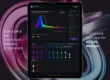
The screenshot shows the spectrum mixer of the upcoming GHL Connect AI app (planned for Q4 2026), here with the unmodified LX8 baseline spectrum.
Its standout feature is the Match function. Display one or more reference spectra — a fluorescent-protein excitation curve, for instance, or the daylight spectrum at a chosen water depth — and a single click lets the software work out the setting for every LED channel to reproduce that reference as closely as the luminaire allows. The very science described in this article becomes something you can dial in.
And of course every channel can still be adjusted by hand, and the whole light shifted warmer or cooler with a single tap — whenever you’d rather set it yourself.
Takeaway
Coral fluorescence isn’t one effect but many — a whole palette of proteins, each waiting for its own part of the spectrum, alongside reflecting pigments that don’t glow at all. That’s why no single color of light reveals everything, and why a broad, blue-rich spectrum that reaches from violet to red does the most: it drives growth and photosynthesis while letting the full range of color come forward.
The science points to a clear target — and modern lighting lets you hit it. With a fixture that covers the whole range and software that can match a spectrum for you, you no longer have to guess. Whether you start from a ready-made setting or fine-tune every channel yourself, the result is the same: you’re no longer guessing at your lighting — you’re reading your tank.