
Fluorescent Proteins and the Ideal Spectrum for Vibrant Coral Colors
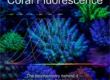
Have you ever wondered why corals glow with such vibrant, otherworldly colors under aquarium lights? The secret lies in coral fluorescence, a fascinating process that involves special proteins that absorb and re-emit light in stunning hues. Whether you’re a hobbyist, coral breeder, or professional, understanding how this phenomenon works is key to maintaining vibrant, healthy corals in your system.
Coral fluorescence is driven by proteins such as blue fluorescent proteins (BFPs), cyan fluorescent proteins (CFPs), green fluorescent proteins (GFPs), and red fluorescent proteins (RFPs). These proteins absorb specific light wavelengths and re-emit light at longer wavelengths, giving corals their striking colors. Each protein is excited by different wavelengths of light, which is why lighting plays a critical role in bringing out the full spectrum of coral fluorescence.
Different fluorescent proteins are excited by different parts of the spectrum. The cyan- and green-emitting proteins that produce most of the visible fluorescence in corals are driven by blue light, roughly 440–490 nm. Red-emitting proteins are different: they are excited most strongly by green-to-yellow light (around 520–570 nm), not by blue. And a good deal of the blue, purple, and some red coloration in corals doesn’t fluoresce at all — it comes from chromoproteins, pigments that create color by reflection rather than by glowing.
This is the core of GHL’s “Wide-Band-Blue” idea: a broad violet-to-blue band (about 390–510 nm) that covers the excitation needs of the cyan and green proteins behind most of the visible fluorescence. The figures here are approximate — coral fluorescent proteins come in many variants with broad, overlapping excitation curves, so these are typical bands, not fixed values. Exciting the orange-red emitters and rendering the full palette also calls for light beyond this band, toward green and the warmer wavelengths — which is why a complete, tunable spectrum matters.
Fluorescent proteins do more than look striking, though their exact biological role is still debated. The best-supported idea is photoprotection — that these pigments help the coral cope with excess light and ease the strain on its symbiotic algae (zooxanthellae) — but the mechanism is still being studied. What the evidence does not support is the popular claim that fluorescence directly feeds photosynthesis: that is a separate process, and the two are best kept apart.
For aquarists, the practical takeaway is simple: the spectrum you choose decides which proteins light up and how much color you actually see. A blue-rich spectrum that also reaches into violet at one end and toward the warmer wavelengths at the other brings out the widest range of fluorescence while supporting healthy growth.
Whether you’re just starting out or are a seasoned coral keeper, understanding how light shapes your corals’ fluorescence is what lets you bring out their full color and keep a thriving reef in your own aquarium.
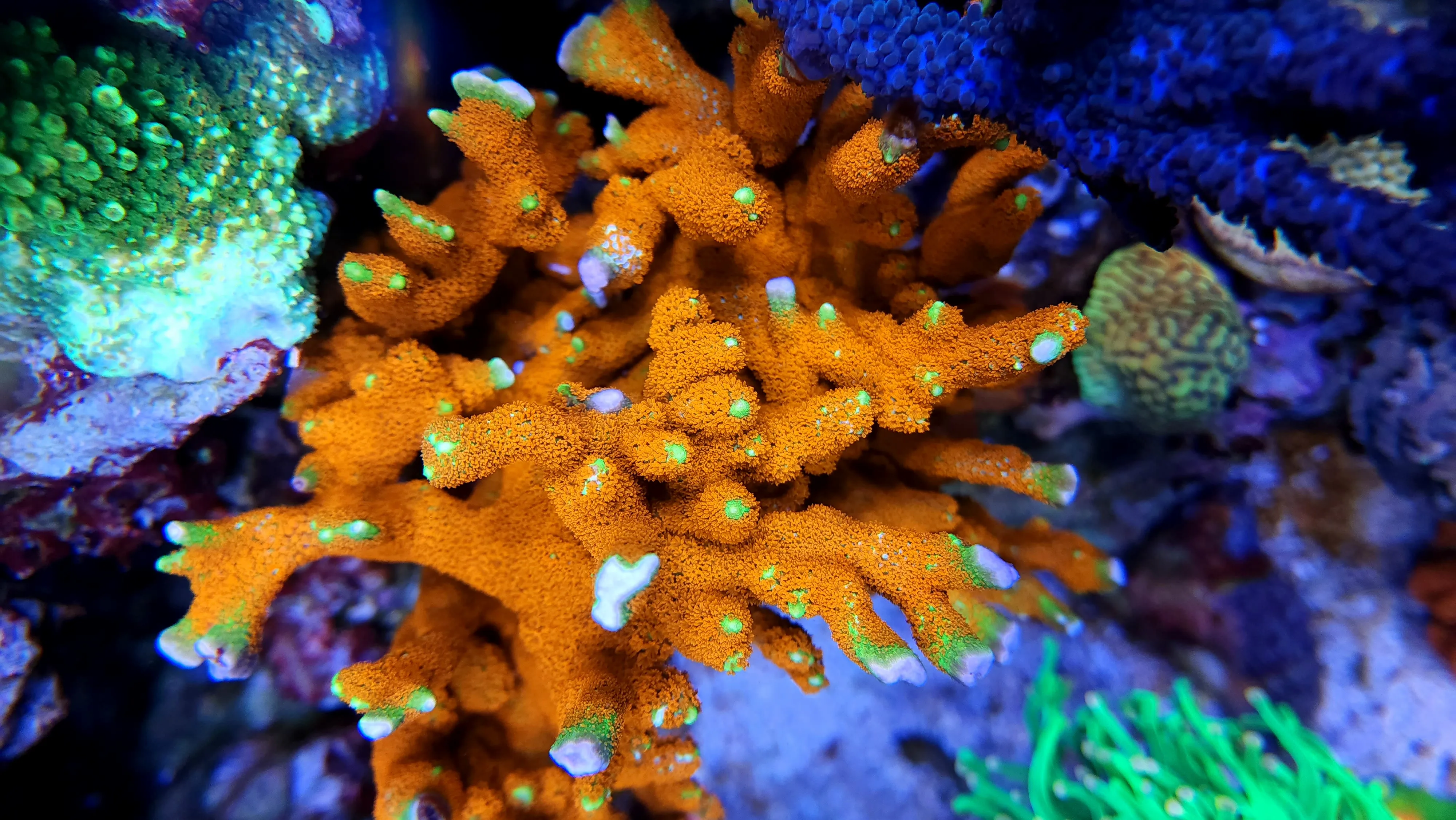
Fluorescence Process in Coral Proteins
Fluorescence in corals occurs when certain proteins, known as fluorescent proteins (FPs), absorb light at one wavelength and then re-emit it at a longer wavelength. The internal mechanism behind this is based on the chemical structure of the protein. At the core of each fluorescent protein is a chromophore—a group of atoms that can absorb and emit light.
When light of a specific wavelength (excitation light) hits the chromophore, it causes the electrons in the chromophore to move to a higher energy state. This process is called excitation. The protein then undergoes a slight structural change, stabilizing the excited state. After a very short time (nanoseconds), the electrons lose some energy and return to their normal state, a process called emission. This released energy is emitted as light at a longer wavelength than the absorbed light, which is what we observe as fluorescence.
The difference between the absorbed and emitted light is called the Stokes shift, and it explains why fluorescent proteins in corals absorb higher-energy light (such as blue or UV) and emit lower-energy light (such as green, red, or cyan).
The Right Illumination
To bring out vibrant coral fluorescence and support healthy growth, the spectrum is what matters. GHL’s Mitras LX8 and LX7 luminaires — together with the Mitras LX7 IL for industrial and research use and the Mitras Lightbar 3 — combine advanced LED technology with freely adjustable spectra. They cover the full Wide-Band-Blue range (390–510 nm) that drives the cyan and green proteins behind most of the visible fluorescence, and their separate color channels reach beyond it — toward violet and the warmer wavelengths — to excite the remaining proteins and complete the palette.

Mitras LX8
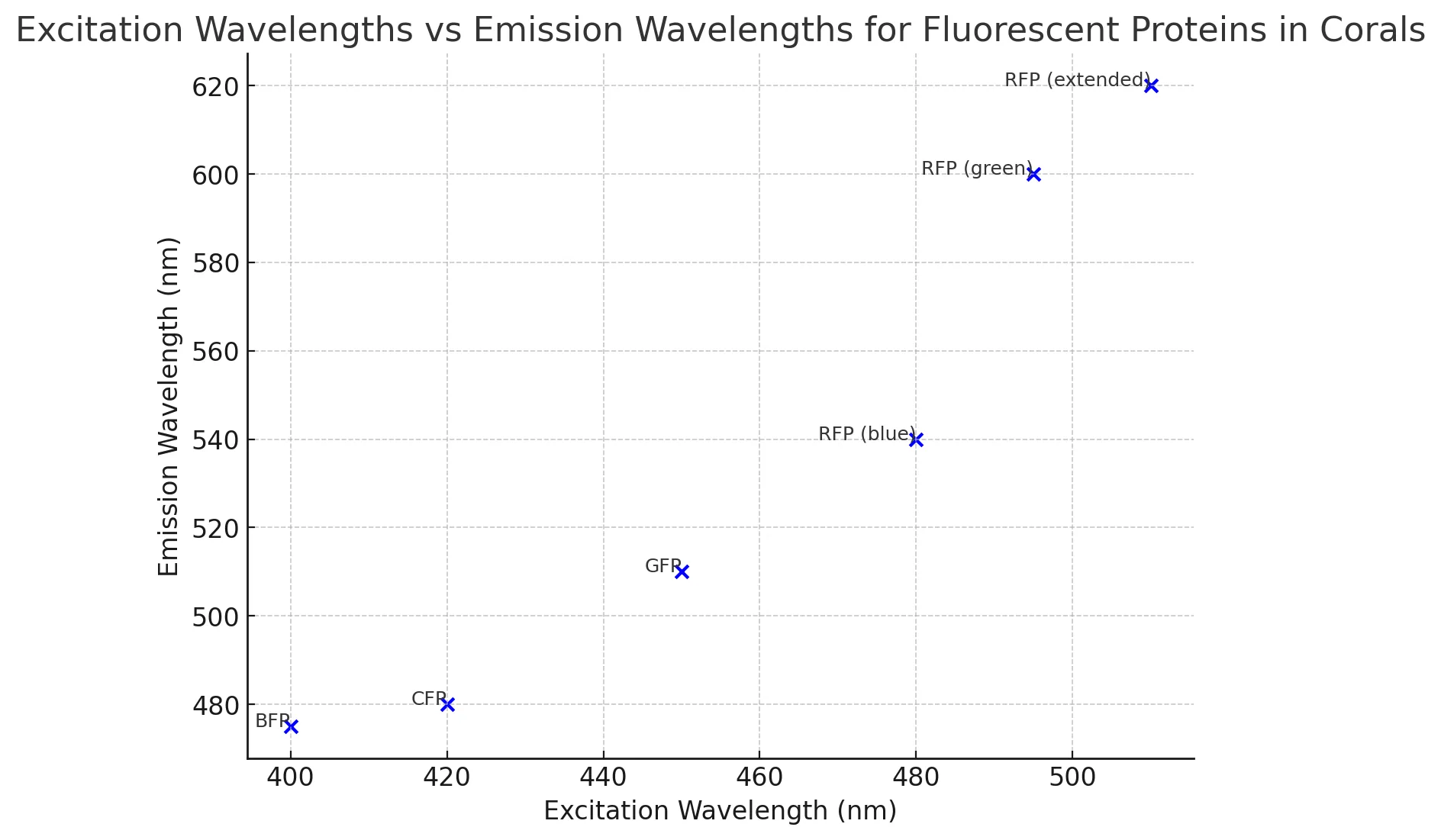
Here is a chart that illustrates the relationship between the excitation wavelengths and the emission wavelengths for fluorescent proteins in corals. As you can see, each fluorescent protein responds to specific wavelengths of light for excitation, and they emit light at longer wavelengths, producing the vibrant fluorescence we observe in corals.
This visualization helps explain why the spectrum matters: lighting like GHL’s Mitras LX8 and LX7 luminaires, the Mitras LX7 IL, and the Mitras Lightbar 3 can cover the excitation bands each protein class needs, bringing the full range of coral colors forward.
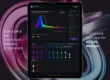
- The Mitras LX8 is GHL’s flagship reef luminaire. Its twelve independently adjustable color channels reach from near-UV through blue and green to a measured Hyperred, covering the excitation bands of the full protein palette on a blue-rich base that keeps corals growing. Flicker-free analog dimming and automatic power balancing across the channels let you shape the light precisely — to your tank and to your eye.
- The Mitras LX7 is a professional-grade luminaire for open aquariums, with precise spectral control for fine-tuning the light to your corals’ needs. The water-proof Mitras LX7 IL covers industrial and research applications, delivering higher output for large-scale or specialized coral cultivation.
- The Mitras Lightbar 3 focuses on uniform, energy-efficient light distribution. The water-proof bar works under a canopy or above an open aquarium and uses GHL’s Total Reflection and Diffusion Technology (TRDT™) for even color blending across the spectrum — a strong choice for boosting coral fluorescence while keeping growth healthy.
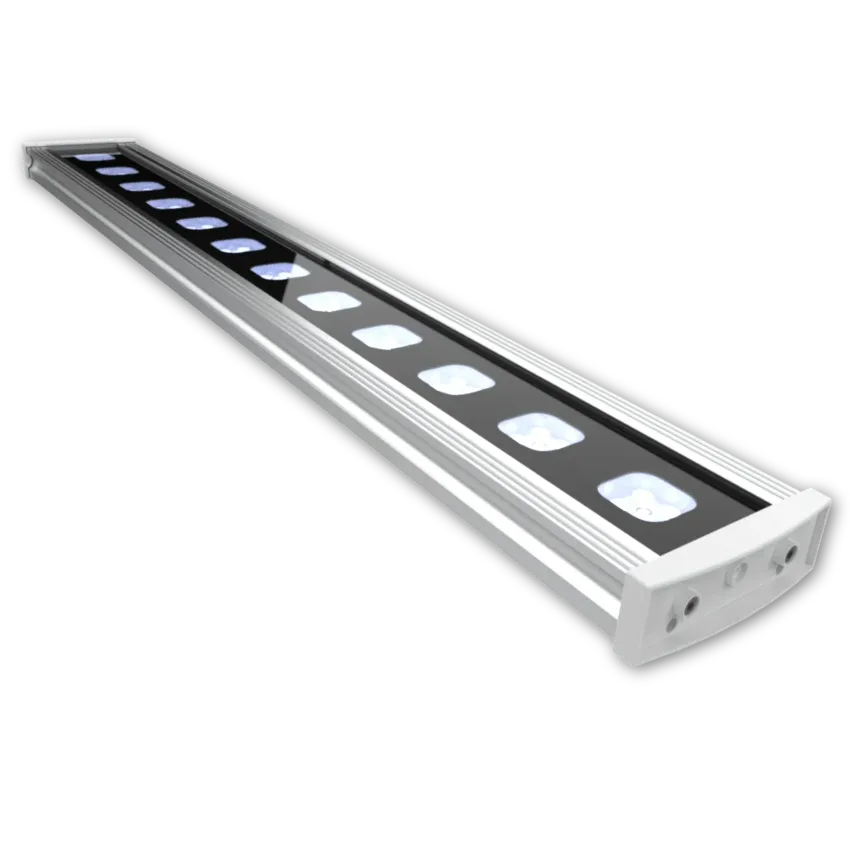
Mitras Lightbar 3
Each of these products integrates seamlessly with GHL’s controller systems, offering comprehensive lighting management for aquariums of all sizes. Whether you’re a hobbyist or a professional, these lighting solutions provide the tools needed to maximize coral health and vibrancy. Explore more about the Mitras Lightbar 3, Mitras LX 8, Mitras LX 7, and LX 7 IL series to bring out the best in your aquarium system.

Mitras LX7
Coral fluorescence comes down to a few clear principles: fluorescent proteins glow when light of the right, shorter wavelength reaches them, chromoproteins add color by reflection, and each protein class responds to its own part of the spectrum. A complete, well-balanced spectrum — blue-rich at its core, reaching into violet and a measured amount of red — is what lets the full palette show while keeping corals healthy and growing. GHL’s Mitras luminaires are built around exactly that spectrum, with adjustable channels to match it to your tank.
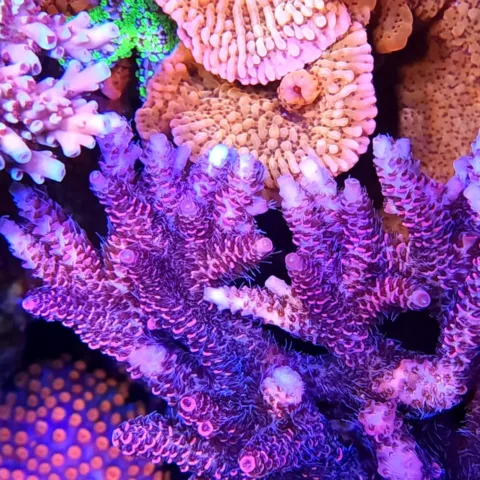
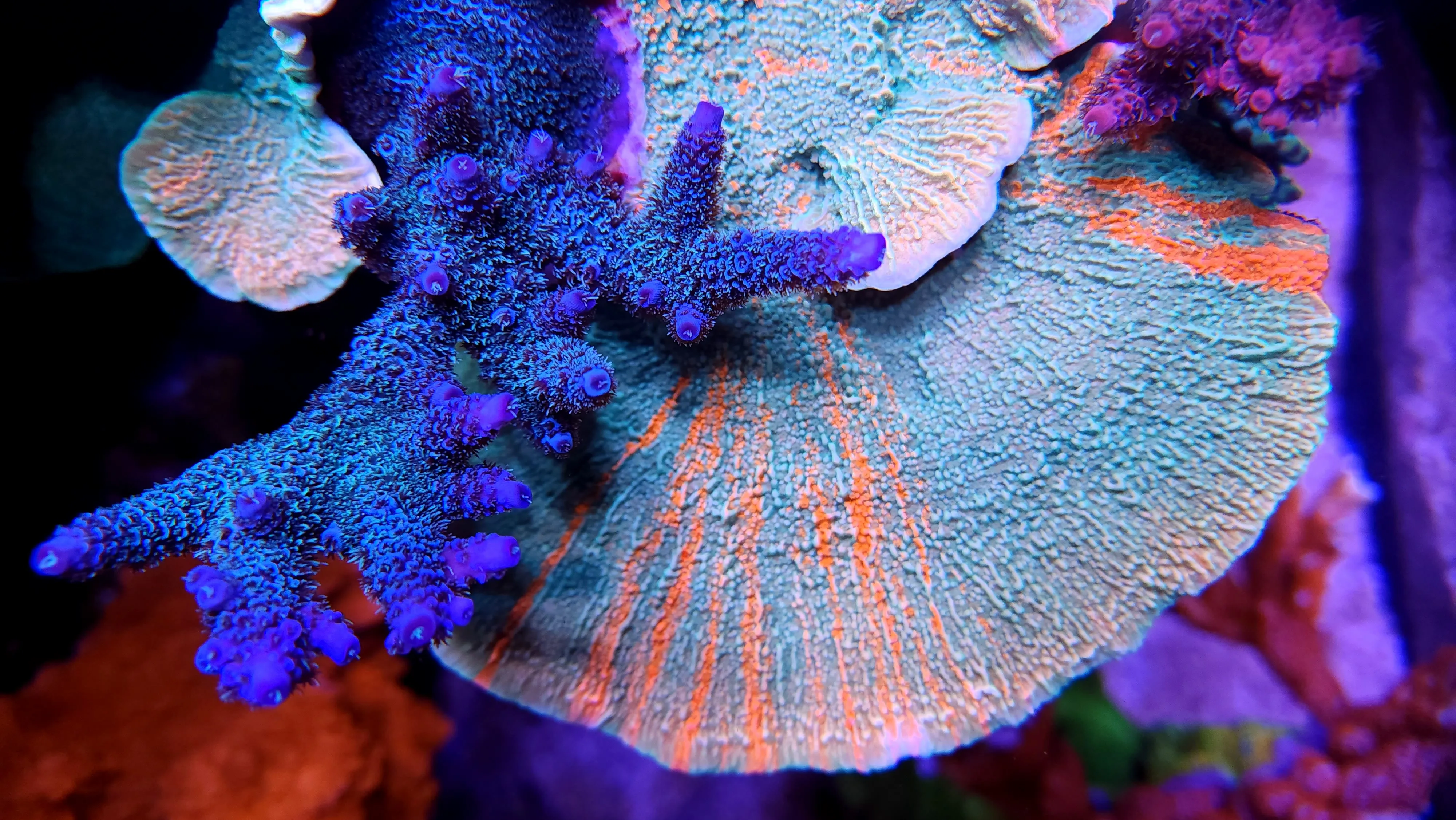
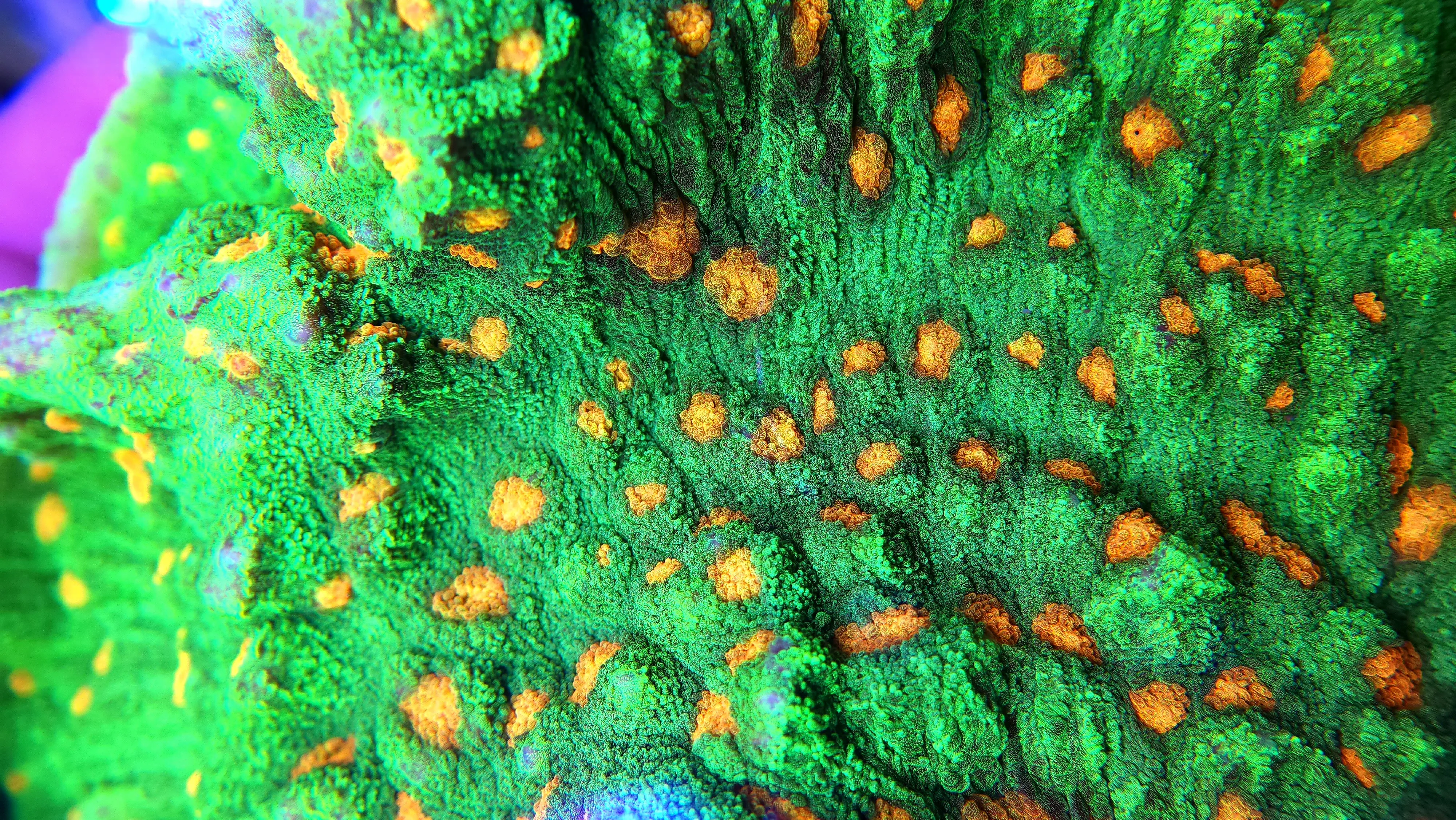
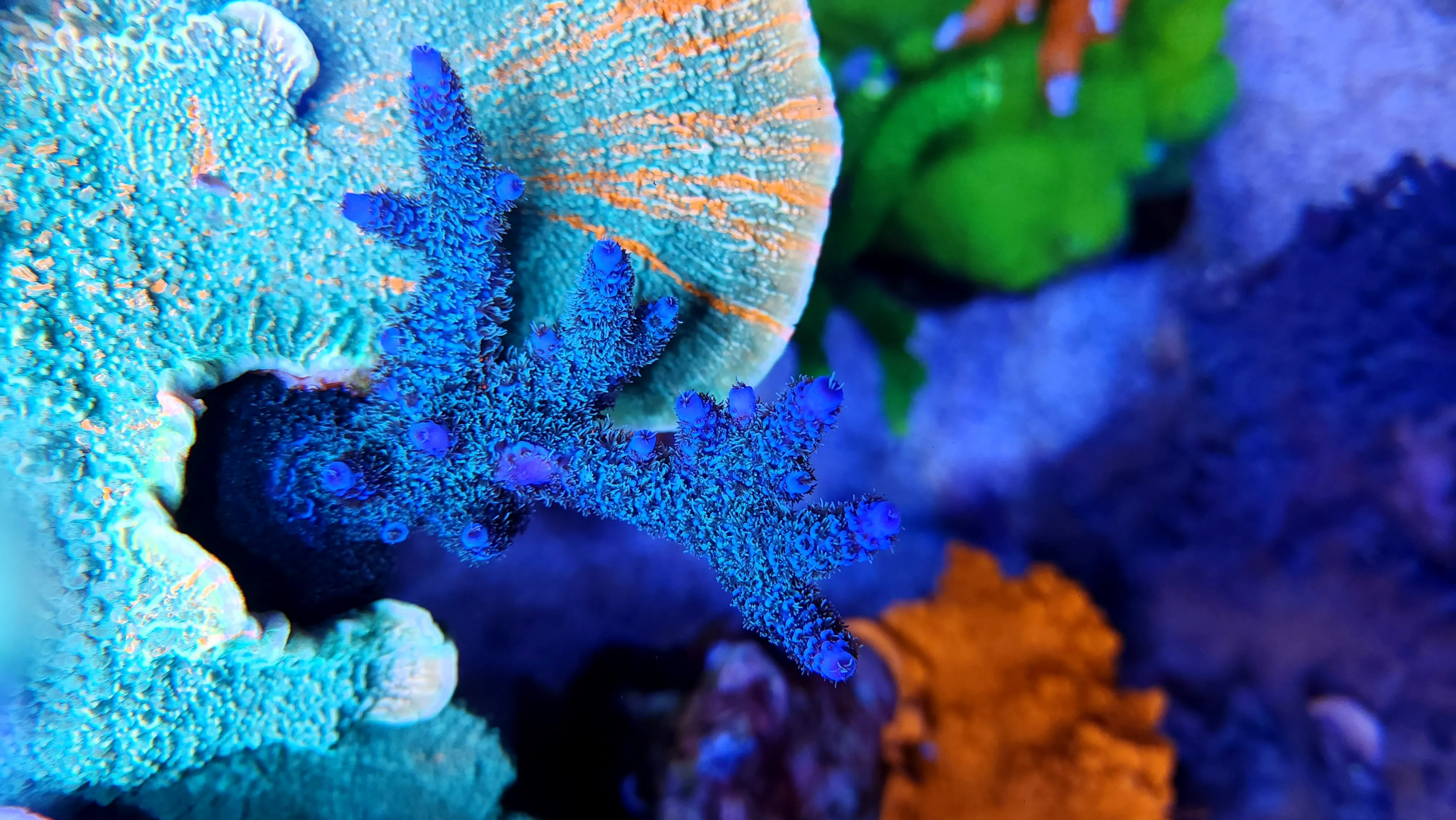
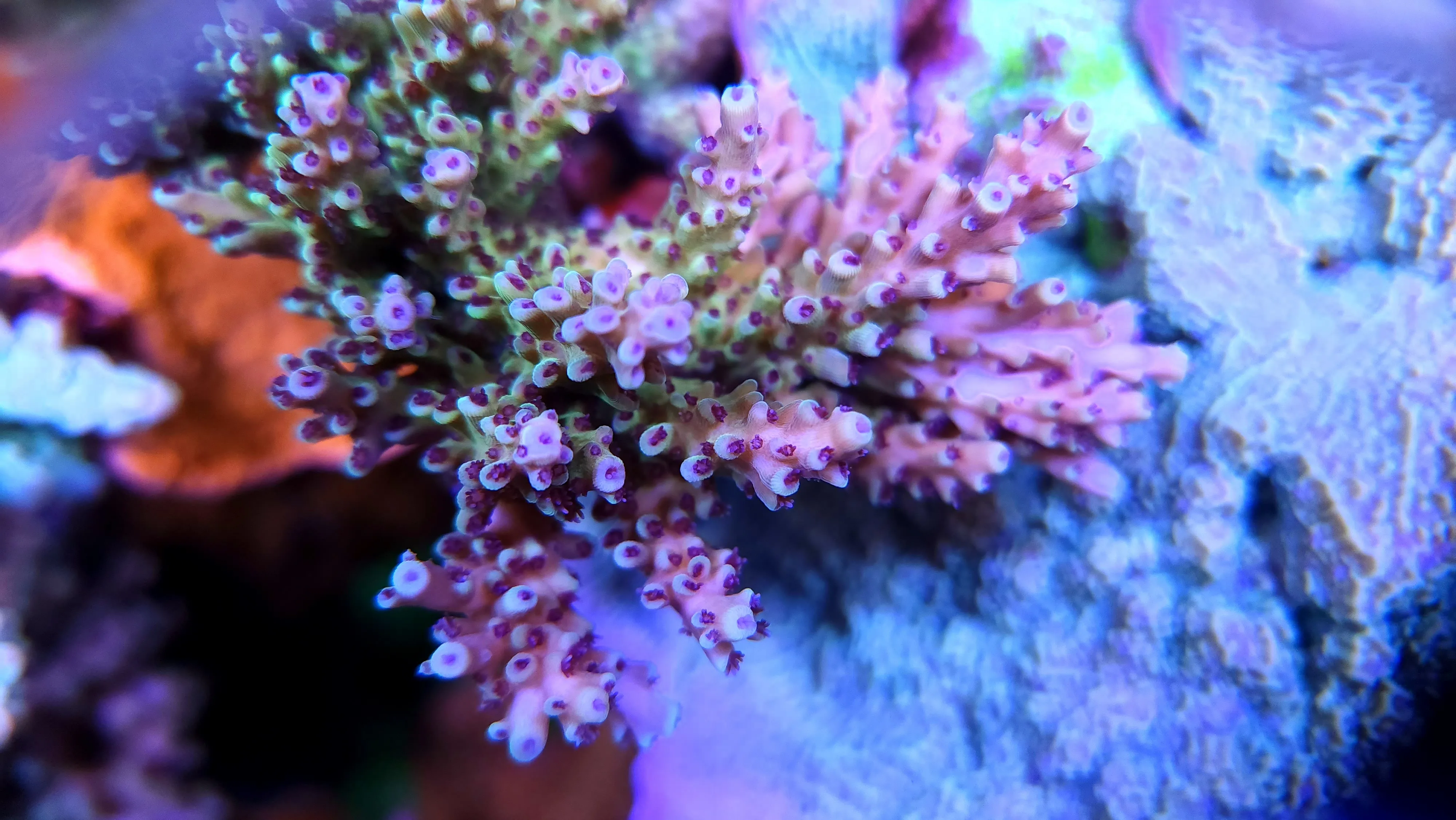
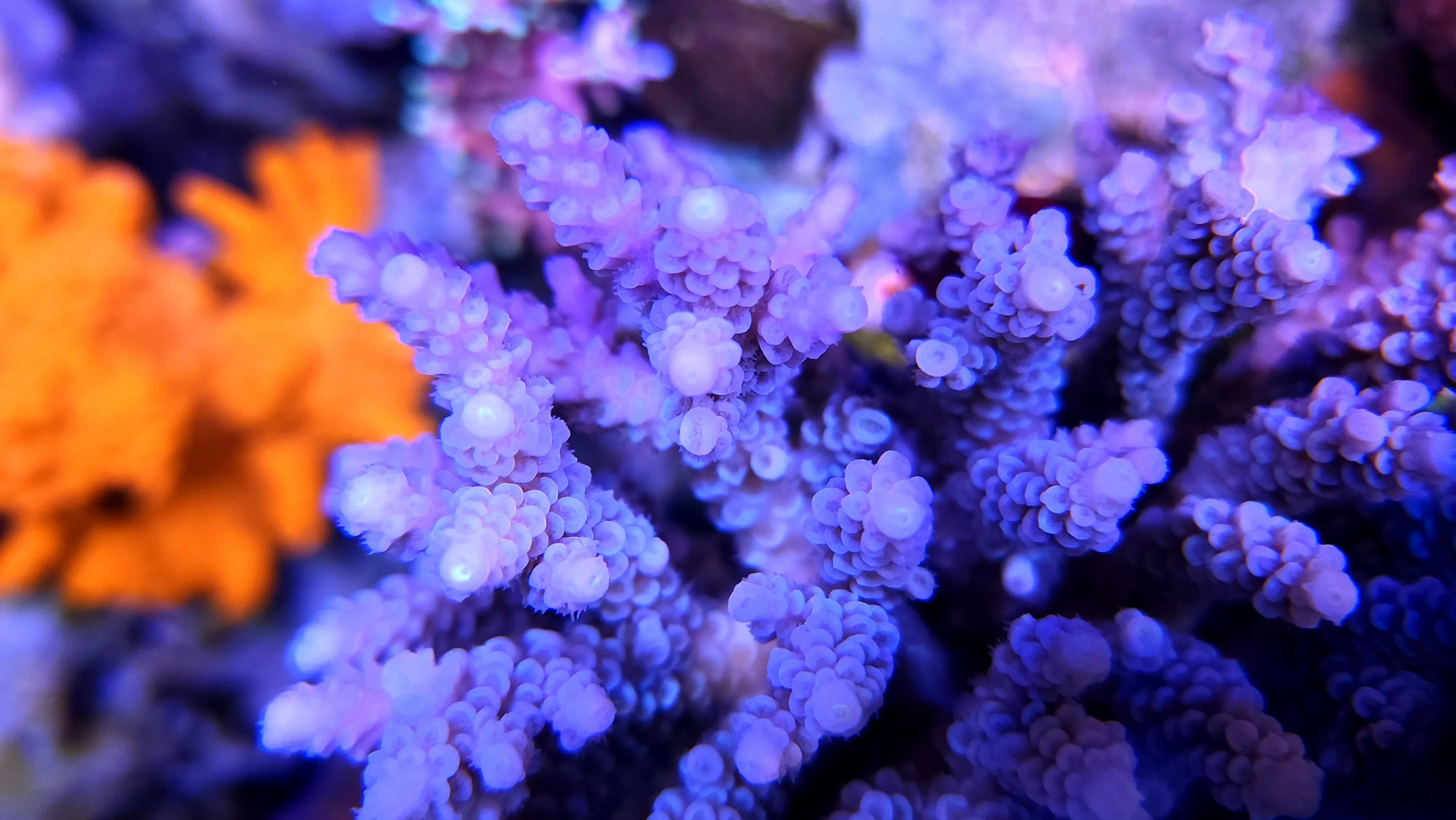
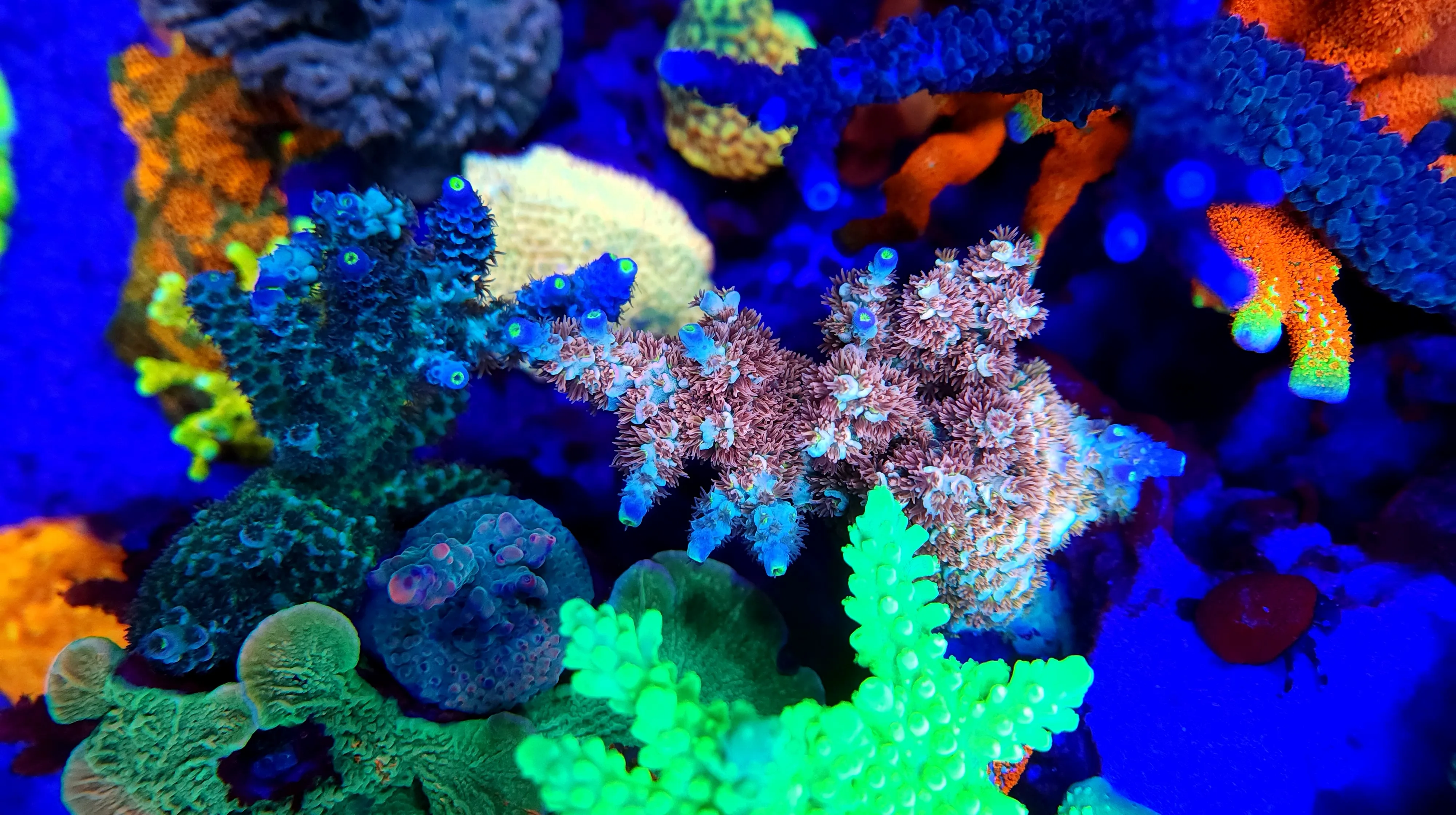
Coral photos courtesy of Vinny Altamirano. Photos taken under GHL Mitras LX7 lighting.